Leather, lace, and tulle chafe against skin in changing rooms filled with the click of six-inch heels. Models and stylists stand in pairs while the chit-chat of the audience outside rises with the heartbeats of each member of the show. They are already 40 minutes behind schedule when the official line-up begins. Suddenly the stylists are making their last adjustments, the models are preparing their walks. With only minutes left, each duo stands together, a mutual agreement between them, a look that says, “I trust you”.
It’s showtime.
That night on April 5, 2024, nearly 600 audience members sat in curving rows on the ground floor of the Royale nightclub. For the first time ever, Northeastern’s Fashion Society (TFS) hosted its annual fashion show at an off-campus venue. Nearly 40 stylists and models were chosen from an application pool at the beginning of the school year to take part in the show.
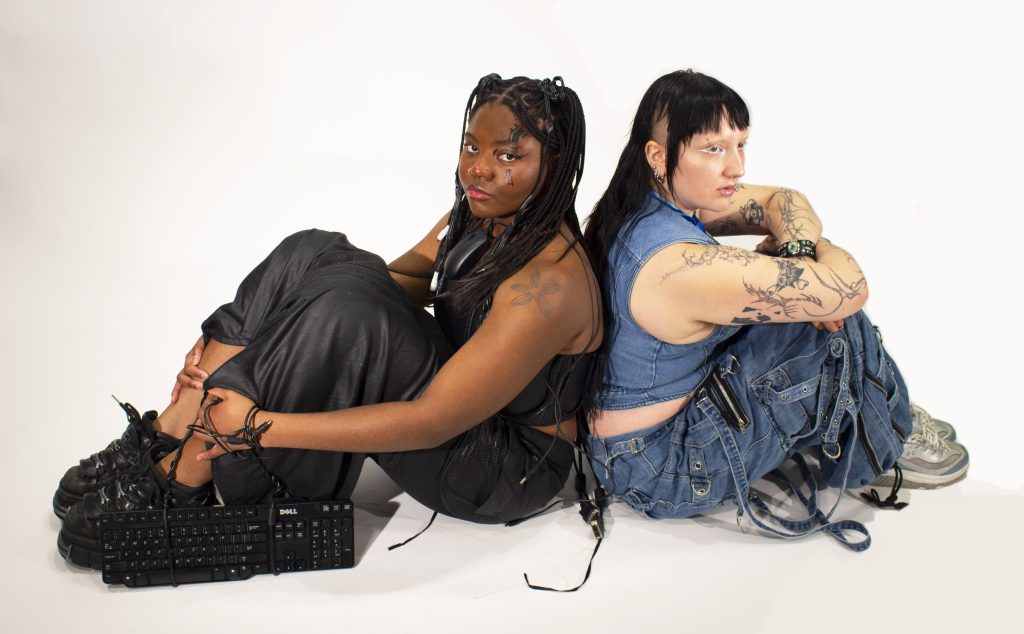
From there, the process began. Models and stylists were paired one-on-one and met throughout the year to discuss vision and fit pieces. During this time, some pairs grew closer. This was the case for the now fourth-year model, Brianna Nnadi, and their stylist Rue Trvalik, a current Northeastern graduate. In an emotional moment at the end of the show, Nnadi admired the look they were wearing as their stylist watched.
“I’m seeing someone look at their creation on me, especially because it’s someone that I know as a person and I’m not just a hanger for their creations,” Nnadi said. “Having that process be displayed on my body, it almost brought me to tears.”
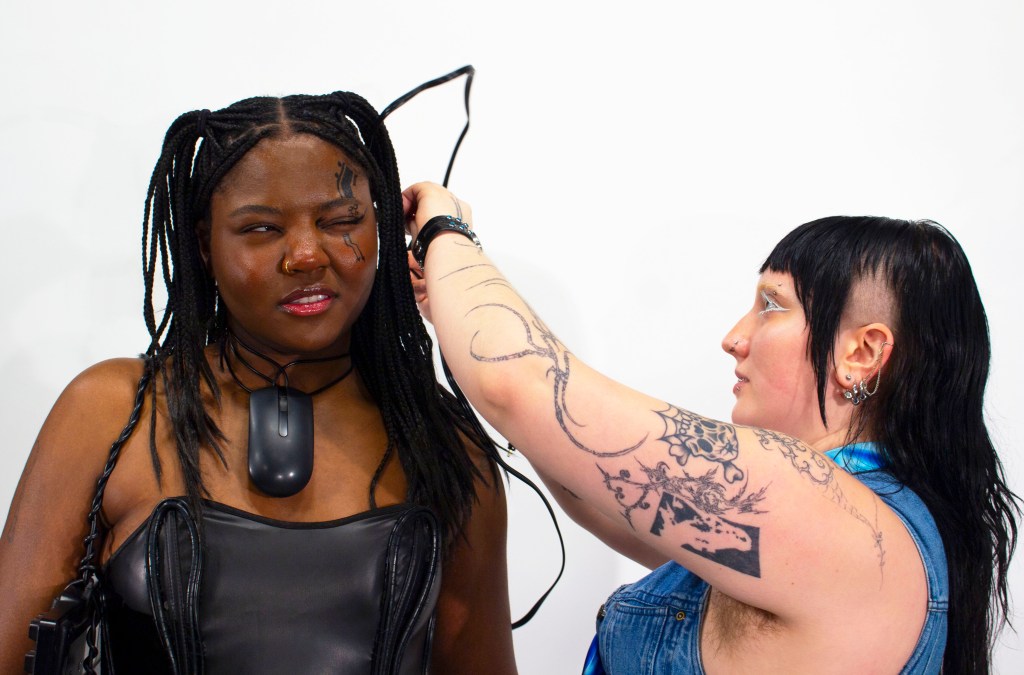
Over the course of the year, Nnadi and Trvalik met roughly five times for fittings. However, according to senior Deborah Yu, model and a past member of the TFS E-board, not all stylist-model pairs collaborate nearly as much.
“Sometimes stylists will go the whole semester just doing their own thing, and then at the end, we’ll be like, here you go. Put this on,” Yu said.
Trvalik, having lots of experience in runway, especially as a stylist lead in last year’s TFS show, has occasionally seen a similar lack of collaboration.
“I’ve had instances where, you know, either designers aren’t responsive to their models, models aren’t responsive to designers. Maybe they don’t even have a fitting before the show,” Trvalik explained.
In cases like these, fashion shows often run into some awkward wardrobe situations.
Across the runway scene, even in professional settings, models are occasionally pushed onto the catwalk in ill-fitting looks. They walk the show hands firmly pressed against the cloth to keep everything together. In these cases, communication between designers and models can be a crucial factor, especially when creating looks from scratch for each model.
For the TFS show, which is almost entirely student-led, a majority of the final looks are thrown together after a mix of thrifting, closet borrowing, and DIYing. Lacking a major in fashion design, Northeastern doesn’t have many conventional designers who make and adjust pieces from scratch. This means most of the looks already fit the model appropriately and there are only minor alterations made.
There is, however, the occasional designer hobbyist recruited to the show. Last year, it was now-sophomore, Cassandra Ling who began sewing at eight years old using a machine from her grandmother, a seamstress in New York City. Three of her full-length gowns were displayed in the show, all of which were created entirely from scratch. For one specific look, Ling created a dress for model Isabella Pineiro, a current senior. During the process, they communicated extensively and met roughly three times. Pineiro remembers her first reaction to the dress being one of awe.
“It was just so beautiful. And I wanted, just to embody her vision the best way that I could.”
In the end, it was their collaborative vision that came to life in front of the audience. According to Ling, Pineiro embodied her ideas and took them to the next level with her runway performance. It is her opinion that creative interpretation is up to the model once they step out on stage.
“I had complete trust in her, going, walking out, onto [sic] there and making it her own,” Ling said.
Trvalik agrees that there is a moment when the stylist has done their part, and it’s up to the model to take it the rest of the way. “I can just watch the models slay,” Trvalik said. “In [terms of] the models that I’ve worked with, I’ve never sent them down the runway, not being like, they’re gonna eat.”
At the end of the day, these shows are student-led and worked on by those willing to give their time. The people who are most passionate are often the ones who meet and collaborate the most.
“You can tell that they understand the vision together,” Yu concludes.
 Sydney Woogerd