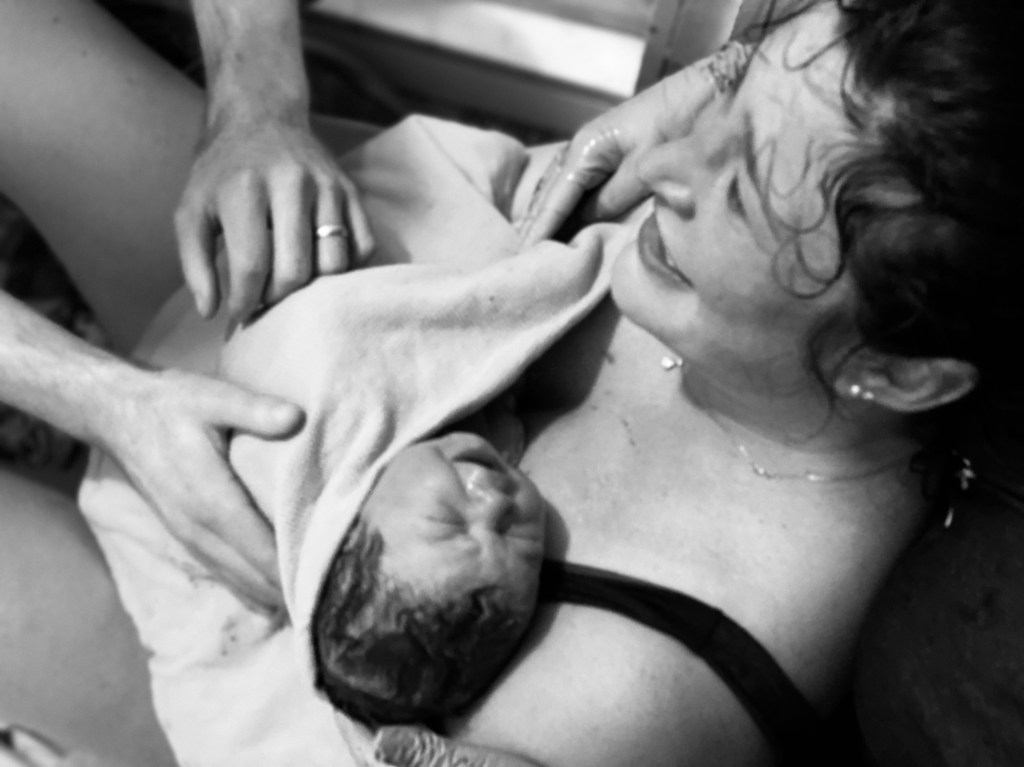
When a healthy baby is born in Nicole Pegher’s hands, they take their first breath and cry, heard for the first time. Well, not actually, that parent and baby have been heard long before wails filled their house. Pegher, a home birth midwife in Massachusetts, has been listening: to the small heartbeats, big kicks and quelled anxieties.
In mid-2024, Gov. Healey signed a bill promoting “access to midwifery care and out-of-hospital birth options,” including an expansion of MassHealth benefits and state licensing for midwives. But why now?
During COVID-19, with restricting policies on hospital births, families searched for an alternative birthing option. The result was, according to the Boston birth registry, a threefold increase in home births from 2019 to 2020, and a 45% jump state-wide from 2018 to 2023 according to the Centers for Disease Control and Prevention.
Pegher, a certified professional midwife of 10 years and the vice-president of the Massachusetts chapter of The National Association of Certified Professional Midwives says it’s the personal care home birth midwives provide which keeps clients coming, even after the pandemic.
“I know this woman, I know her baby, I know her pregnancy,” Pegher, who delivers 20-30 babies a year, said. “We have such a unique relationship with the family, because we’re in their home and we know them.”
Pegher offers roughly 10 prenatal checkups, each 45 minutes to an hour in length. At the Massachusetts General Hospital in Boston, roughly 750 babies are born a year, and prenatal checkups are 10 minutes long, according to Chief Midwife, Melissa Nelson.
Before the 1900s, holistic midwife care was the norm, especially among southern Black communities, where it was a tradition and culture, according to the Black Midwifery Collective. However, with the professionalization of white-male dominated medicine and smear campaigns against midwifery, the tradition diminished. By 1951, 90% of births were performed in hospitals, according to a report published by the National Library of Medicine.
In 1915, Dr. Joseph DeLee said in a speech to the American Association for Study and Prevention of Infant Mortality titled “Progress Toward Ideal Obstetrics,” that midwifery was a “relic of barbarism,” which stunted medical progress.
According to Rebecca Herman, another CPM and president of the Massachusetts chapter of the NACPM, a common misconception about CPMs is that they are medically untrained. In reality, CPMs are licensed healthcare providers. They administer the same pre and post delivery procedures as a physician, including labs, ultrasounds and postpartum measurements. During births, they bring resuscitation equipment, IVs, lidocaine, catheters, materials for sutures.
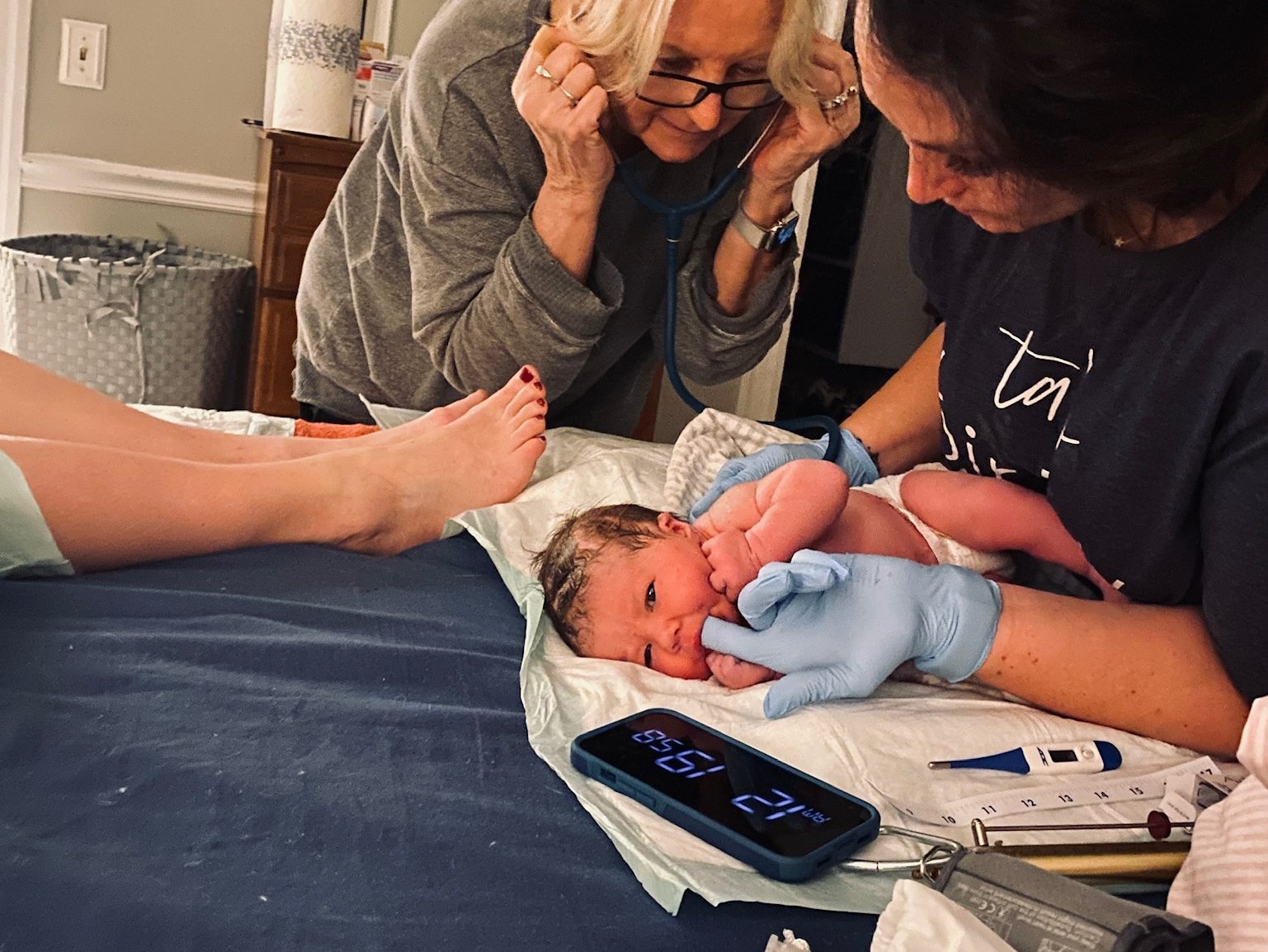
While physicians excel in managing high-risk pregnancies, there is a philosophical difference between midwifery care and medical doctors’ model of care.
“I think home birth practices, birth center practices, do so much better in terms of aspects of wraparound care,” Nelson said. “They’re meeting you where you’re at. They’re coming to your home, and not saying that you can’t get that in a hospital, but it’s a little bit of a different system.”
Foundationally, it’s hard for hospitals to provide individual-level care en masse.
“Sometimes people just don’t feel respected. They feel that they were just put in a conveyor line of pregnant people. It’s hard to get that personalized care,” Pegher said. “This isn’t the hospital’s fault, it’s just the culture.”
Dr. Elyse Watkins is a specialist in women’s health and the associate program director for the doctor of medical science program at Northeastern University. Before her career in education, Dr. Watkins worked as an OBGYN physician’s assistant for 20 years and saw first hand how hospital culture can affect birth.
“It’s a money game. It’s a numbers game. You want patients in and out quickly. You don’t want a patient taking up that bed for three days, because you’re literally losing money on her. So that’s one of the beauties of using (home birth) midwives,” Dr. Watkins said. “They’re not driven by the finances.”
Eight weeks ago, Annie Lenihan, a mother in Scituate, Massachusetts, gave birth for the second time outside her bathroom with Pegher’s help. After having her first child in the same room with the same midwife, Lenihan says she can’t imagine it any other way.
“I felt safer, I felt more supported, and based on the seven or eight friends that have gone through (hospital) birth, I am probably the happiest parent out of all of them,” Lenihan said. “I chalk that up to my birth experience and the people that supported me through it.”
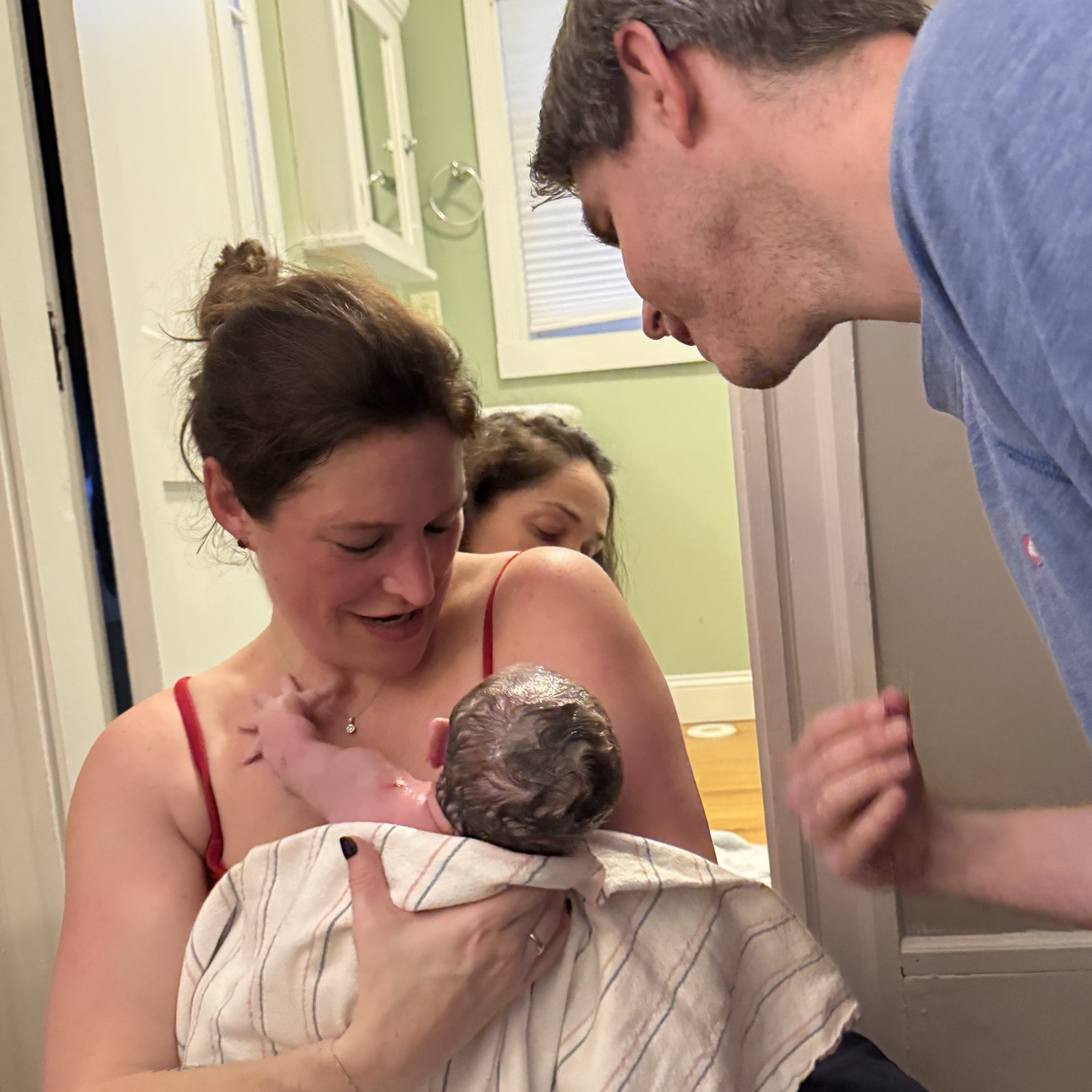
Photo courtesy: Annie Lenihan
Herman agrees that there is a foundational difference between midwifery and physician-led birth care.
“Physicians are trained to see birth as a pathology, as something that needs to be managed, that is inherently dangerous, that needs surgery or needs treatment.” Herman said. “Midwifery is fundamentally about supporting a natural process.”
Despite physician intervention, maternal mortality rates have increased nationally since 1987 according to the CDC. In 2022, the CDC also calculated Massachusetts’s maternal mortality was 16.4%, 6.8 percentage points less than the national average but still higher than any high income country in the world. Despite this, a study published by The Lancet in 2020, found that low risk deliveries at home often resulted in better maternal outcomes, including a decreased number of invasive interventions, infection and vaginal tearing compared to low risk hospital deliveries.
Still, in 2023, home births only made up 0.8% of the births in Massachusetts according to the CDC. So why, if midwives are properly equipped and scientifically backed, are home births still so uncommon?
In 2019, Statista said the U.S. had the highest median cost for childbirth in the world, before insurance. In Massachusetts in 2020, the average delivery, not including prenatal and postpartum care, cost $1,431 after insurance, according to the Health Cost Institute.
Because Massachusetts does not currently provide state licensing to CPMs, offering insurance to clients is difficult. Most clients pay out-of-pocket for a midwife, according to Herman, sometimes three or four thousand dollars more than the average state birth after insurance. As a result, home birth care has become financially exclusive.
With the bill Gov. Healey signed covering midwifery care under MassHealth, and the appointment of the first-ever Board of Registration in Midwifery in Massachusetts, in which Peger and Herman are both members, there is hope that midwifery will become more accessible.
As a part of the next generation of CPMs entering the workforce, Adriana Jean Louis, a midwifery student and employee at the Department of Public Health, hopes for a future where more people can have access to exemplary care.
“(They) have done a fantastic job as far as allocating funding towards maternal health initiatives. It’s tipping the iceberg, it’s making a huge difference,” Jean Louis said. “It’s really important that any person who wants this experience is given the opportunity to have the best care despite their circumstances.”
Sitting in her home, in the living room where she labored for hours, Lenihan says she wouldn’t be the same without her birth experience and midwife.
“To have that trusting relationship, but with someone who is specialized in care is just invaluable,” Lenihan said. “I hope more people explore, because it really teaches birthing people that birth is not something to fear.”
 Sydney Woogerd